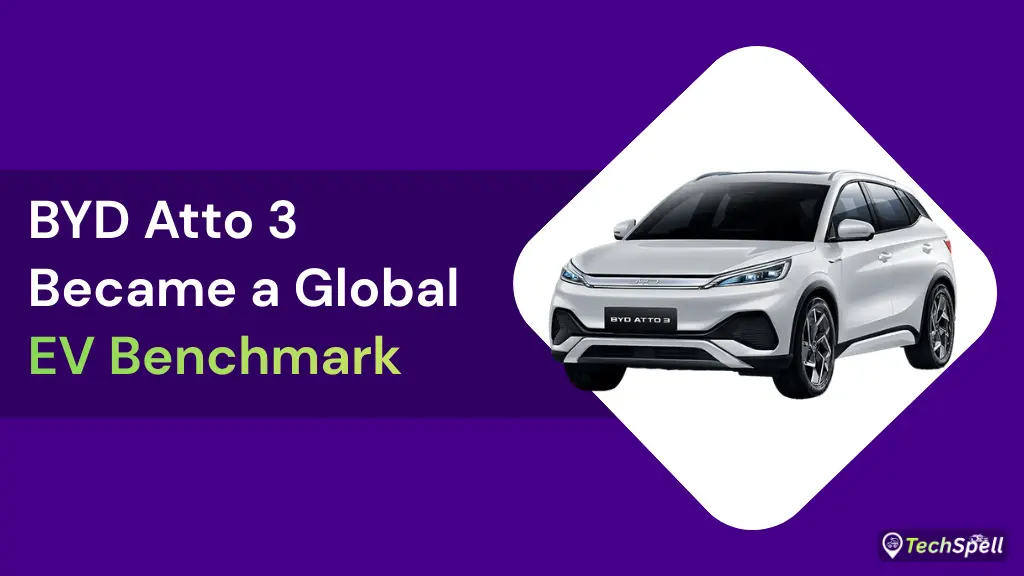
The worldwide automotive industry reached its peak in 2025 because BYD (Build Your Dreams) established itself as both a car producer and the main force behind electric vehicle adoption for regular consumers.
The BYD Atto 3 serves as the main driver of this change because it represents a compact SUV which demonstrates how to unite modern technology with affordable pricing for worldwide markets.
Contents
- 1 BYD Atto 3 Efficiency and Lifespan
- 1.1 BYD Atto 3 Blade Battery Technology
- 1.2 Lucid Air Grand Touring Real-World Range Test: Can It Really Go 500 Miles?
- 1.3 Market Impact vs Global Competitors
- 1.4 BYD Atto EV 3 FAQ’s
- 1.5 Atto 3 model includes fast charging functionality?
- 1.6 BYD Atto 3 battery maintains its performance for how many years?
- 1.7 Does Atto 3 provides safety features?
BYD Atto 3 Efficiency and Lifespan
The Cell-to-Pack technology at BYD Atto 3 achieved more than 50% better space efficiency through its direct cell-to-pack design which eliminated the requirement for additional bulky modules.
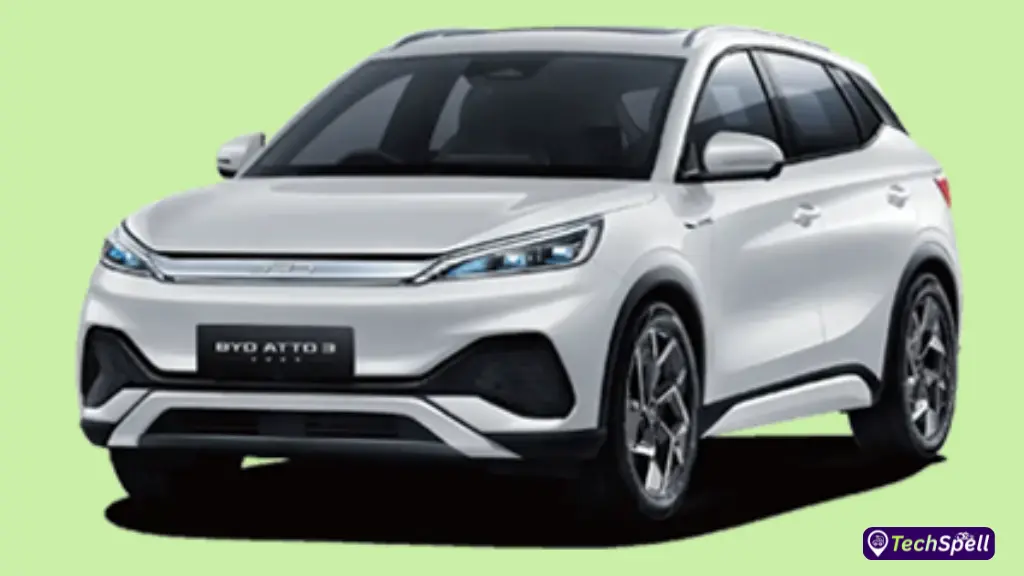
Energy Density: The current models offer customers a maximum driving distance of 420 km based on WLTP testing or 480 km based on NEDC testing depending on their chosen model variant.
Longevity: The LFP chemistry shows better durability than NMC because it can handle more than 3,000 to 5,000 charge cycles.
BYD Atto 3 Blade Battery Technology
The company achieved its success through its development of the Blade Battery technology which it owns as a proprietary invention.
| Feature | Dynamic Variant | Premium / Superior |
| Battery Capacity | 49.92 kWh | 60.48 kWh |
| Range (ARAI/NEDC) | Up to 468 km | Up to 521 km |
| Acceleration (0-100 km/h) | 7.9 seconds | 7.3 seconds |
| Max Power / Torque | 150 kW / 310 Nm | 150 kW / 310 Nm |
| Drivetrain | Front-Wheel Drive (FWD) | Front-Wheel Drive (FWD) |
| Safety Rating | 5-Star (Euro NCAP) | 5-Star (Euro NCAP) |
The majority of the industry used Nickel Manganese Cobalt (NMC) chemistries until BYD developed Lithium Iron Phosphate (LFP) to address the main obstacles which prevent electric vehicles from gaining safety concerns and limited energy storage capacity.

Market Impact vs Global Competitors
The market share of BYD increased dramatically during 2025 because the company achieved cost control through its practice of operating all production stages under its own management.
BYD operates differently from its competitors because it produces all its battery cells and semiconductors and software components in-house.
| Comparison Metric | BYD Atto 3 | Typical Segment Rival |
| Vertical Integration | ~75% (In-house) | ~30% – 40% |
| Battery Tech | LFP (Blade) – Cobolt Free | Often NMC (Cobalt Dependent) |
| Thermal System | Standard High-Efficiency Heat Pump | Often an optional upgrade |
| Global Presence | Manufactured in China, Brazil, Hungary | Mostly Centralized Manufacturing |
BYD Atto EV 3 FAQ’s
Atto 3 model includes fast charging functionality?
The system enables DC charging at rates between 110 kW and 120 kW to achieve an 80% to 10% charge level within 35 minutes.
BYD Atto 3 battery maintains its performance for how many years?
The Blade Battery operates for 3,000 to 5,000 full charge cycles which will extend its service life to 15 to 20 years, surpassing the expected lifespan of the vehicle’s chassis.
Does Atto 3 provides safety features?
The Atto 3 received 5-star ratings from both Euro NCAP and ANCAP for its safety performance. The vehicle features 7 airbags together with its advanced driver assistance system (ADAS).
Conclusion
The BYD Atto 3 provides safety features and efficiency and advanced technology at an affordable price. It also operates as a sales force which drives forward the development of electric car infrastructure and market trust for complete electric vehicle adoption.